
The attack is not focused towards any particular industry but it is widely spread across industries

The Indian Air Force has asked its personnel and their families not to use Chinese 'Xiaomi Redmi 1s' phones, as it believes these phones could be transferring data to their servers in China and hence be a security risk.
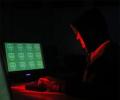
Operating systems are increasingly subject to cyberattacks, as many are built around legacy technologies with weaker protocols

Chief of Defence Staff General Anil Chauhan on Saturday said India's Operation Sindoor has drawn a 'new red line' of intolerance against terror, and expressed hope that the military action has brought 'some lessons for our adversary also'.

Experts said attempts from China have increased in the last year, which further amplified after the Indian government banned Chinese applications post the Galwan clash.

Beware! Use of words such as 'attack', 'bomb', 'blast' or 'kill' in tweets, status updates, emails or blogs may bring you under surveillance of security agencies as the government will soon launch 'Netra', an internet spy system capable of detecting malafide messages.
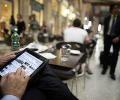
The audacity of the virus has been categorised as 'severe' and cyber experts say such a malicious programme has been detected for the first time which asks for a ransom of an estimated Euro or $300 to unlock the genuine files of a user through 'anonymous pre-paid cash vouchers'.

The 'severely' spreading virus of the Trojan family has been detected conducting its clandestine operations at the point of sale counters placed at retail terminals after the RBI made it mandatory in December last year for debit cards holders to punch in their PIN every time they make a purchase.

Cyber insurance policies cover ransomware attacks and the ensuing damages, including ransom payments, data restoration costs, forensic and other first-party costs, and loss of profit due to business interruption.

Sectoral cyber security teams to be set up to curb attacks, cyber coordination centre likely be set up in New Delhi by June.

The government has also demanded information on vulnerability exploited by attackers and modus operandi of the attack, and sought details of remedial measures taken by Twitter to mitigate the impact of the hacking incident.

It said the ransomware called 'WannaCry' or 'WannaCrypt' encrypts the computer's hard disk drive and then spreads laterally between computers on the same LAN.

A banking Trojan malware has been detected in the Indian cyberspace that is lurking to attack bank customers using Android phones and has already targeted those from more than 27 public and private sector banks, the country's federal cyber security agency said in a latest advisory.

Personal information such as name, gender, email address and phone numbers of some Akasa Air passengers has been leaked to "unauthorised individuals", the airline stated on Sunday. India's newest carrier said it self-reported this incident to Indian Computer Emergency Response Team CERT-In, which is the government-authorised nodal agency tasked to deal with matters of this nature. However, Akasa Air asserted that there was no "intentional hacking attempt, but that the situation was reported by a research expert through a journalist for which we are grateful".

Police has has also sought information from GitHub platform about the 'Bulli Bai' app developer.

'We also realised that locking customers to our Cloud was not fair to them.'
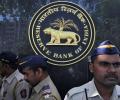
The Reserve Bank has asked troubled digital wallet firm MobiKwik, which is facing data breach allegations, to get a forensic audit done without any delay. Though the Gurugram-based firm has been claiming that its systems are secure and that there is no basis to the allegations of data breach, a group of hackers on Tuesday said that they accessed personal and financial data of nearly 10 crore MobiKwik customers. On Wednesday, sources in the know of the development told PTI that the RBI has ordered an immediate forensic audit of the company's systems by a certified auditor. When contacted, an RBI spokesperson refused to comment. MobiKwik refused to give a direct answer to a query on whether the RBI has ordered a forensic audit.

Facebook blocked 5,832 pieces of content during July-December 2014 on orders of the Indian government.

Call centres, once the engine room of India's BPO exports, are evolving too. Depending on the complexity, 30 to 50 per cent of voice and chat volumes are now handled by conversational AI.

While asserting that the CoWIN portal is completely safe with adequate safeguards for data privacy, it said an internal exercise has been initiated to review the existing security measures of CoWIN.

The government also wants to ensure that content meant for radicalising youths, from outfits like Islamic State, doesn't find circulation in India.

A specialised force with 1,000 personnel to be formed in the state for the same.

With the use of e-wallets gaining momentum after the note ban, e-wallet service providers have doubled down on developing new security features in their apps. Sharath Chowdary reports.

A new mobile banking 'Trojan' virus -- SOVA -- which can stealthily encrypt an Android phone for ransom and is hard to uninstall is targeting Indian customers, the country's federal cyber security agency said in its latest advisory.

An official of the fire and emergency services department said that 11 fire tenders including one each from Panchkula and Mohali were pressed into service to quickly control the blaze.

'If there are any incidents of cyberattacks, they should immediately inform CERT.'
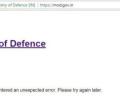
Chinese characters were seen on the website, indicating that Chinese hackers may be involved in it.

India's snooping programme is officially underway and multiple agencies will use internet surveillance system Netra and National Cyber Coordination Centre to keep a tab on suspicious activities on the internet, says Vicky Nanjappa.

Amid increasing number of cyber attacks and snooping, the government on Tuesday announced the national cyber security policy that aims to protect information and build capabilities to prevent such attacks.

The ED may soon register a money laundering case to probe if dubious funds were used for allegedly fuelling caste-based protests in the wake of the alleged gang-rape and death of a Dalit woman in Uttar Pradesh's Hathras, officials said.

Cyber security sleuths have alerted Indian internet users against hacking attempts of a clandestine multi-identity virus -Bladabindi -- which steals sensitive personal information of a user for nefarious purposes.

The virus possesses a unique ability to acquire a safe network domain id in order to falsely add itself to the firewall exclusion list and bypass a user's firewall mechanism.

'You don't need massive industry or huge energy resources.' 'You could start with just 3 or 4 people in a coffee shop and invent the world.'

Even as India's internet base continues to widen, with the country set to have over 900 internet users by 2025, a parallel rise in cyber threats has become a matter of huge concern. Experts say that the sudden surge in digital adoption left little time to develop a cybersecurity backbone for the country. This has put large amounts of data at risk.

Kapil Sibal said there will be multiple places from where cyber war could take place, it will involve individuals, sections of society, businesses, terrorists, drug dealers and those who want to generate violence.

The notice came after reports that political parties had used the data analytics firm during elections.

The NCW has written to the Delhi Police to expedite its action in the case against the 'Bulli Bai' app, floated for trolling and harassing the victims, to ensure that such crimes do not recur.

The Delhi police on Sunday registered a case based on a complaint filed by a woman journalist alleging that she was being targetted by an unidentified group of people on a mobile application named 'Bulli Bai' created on GitHub platform.

The country's cyber security agency CERT-In has advised Facebook users to strengthen their account privacy settings after a recent global 'data scraping' incident in the social media platform affected about 61 lakh Indians.

The Indian authorities feared that these apps were transferring consumer data to locations outside the country, especially China, in an unauthorised and surreptitious manner. With servers in India, the data of local consumers would be stored in the country.
